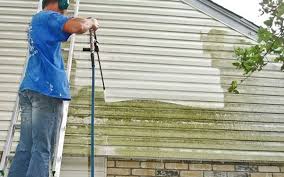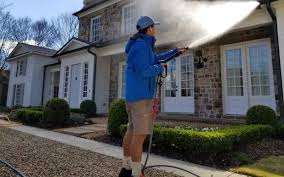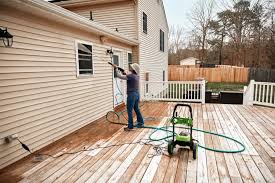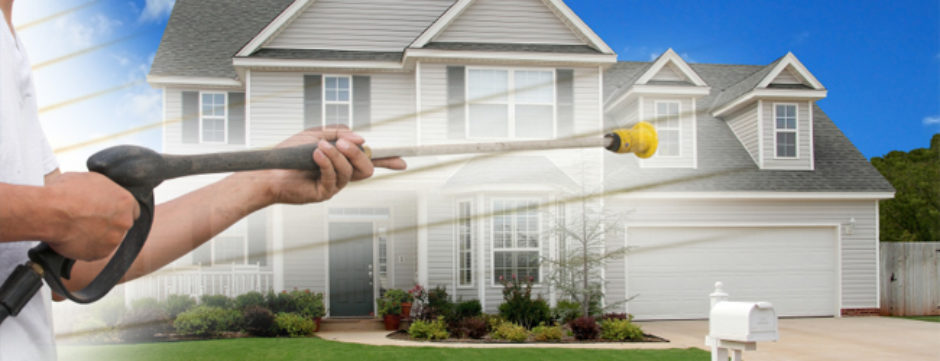
The main difference is that power washing uses highly pressurized steam to do the cleaning while pressure washing just uses unheated tap water, without the help of a heating element.
A pressure washer is one of the best time-saving tools to come along in years. Its high-velocity water spray cleans dirt, grime and chalking paint from otherwise sound-painted surfaces. Pros like pressure washers not only because they’re fast, but because they scour the old paint so the new coat will adhere better. Using a pressure washer to remove paint definitely beats the old garden hose, scrub brush and TSP cleaning method, a task so slow that many people just skip it.
We’ll show you how to pressure wash your home effectively and safely without ruining the siding or compromising the future paint job. If you’re lucky and your paint is sound (no peeling), pressure washing may be the only prep work needed.
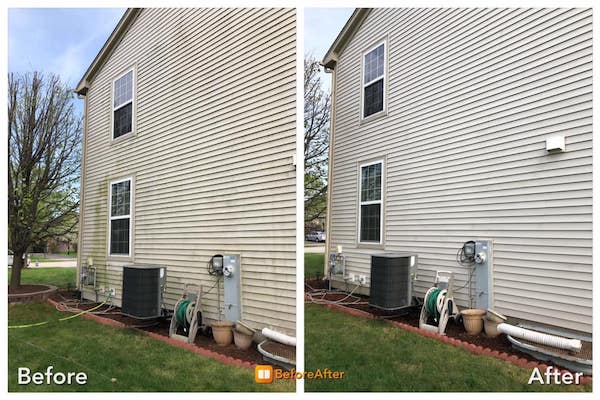
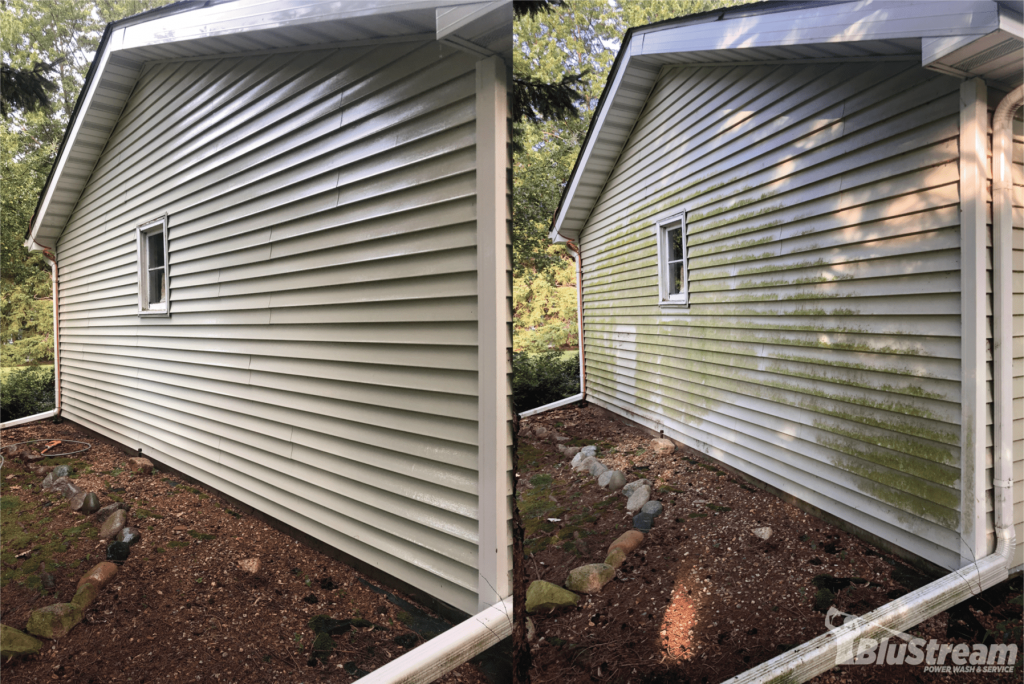
Work from the top down
Begin washing the walls at the top and work down. Wash the gutters and soffits as well as the siding. Direct the spray away from breakable objects like windows and outside lights, and remove house numbers and window boxes whenever possible.
Repair before washing
Replace rotten boards and renail loose ones before pressure washing, so you don’t drive water through the siding and into the wall.
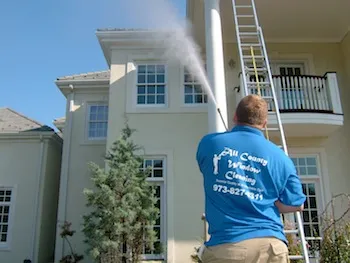
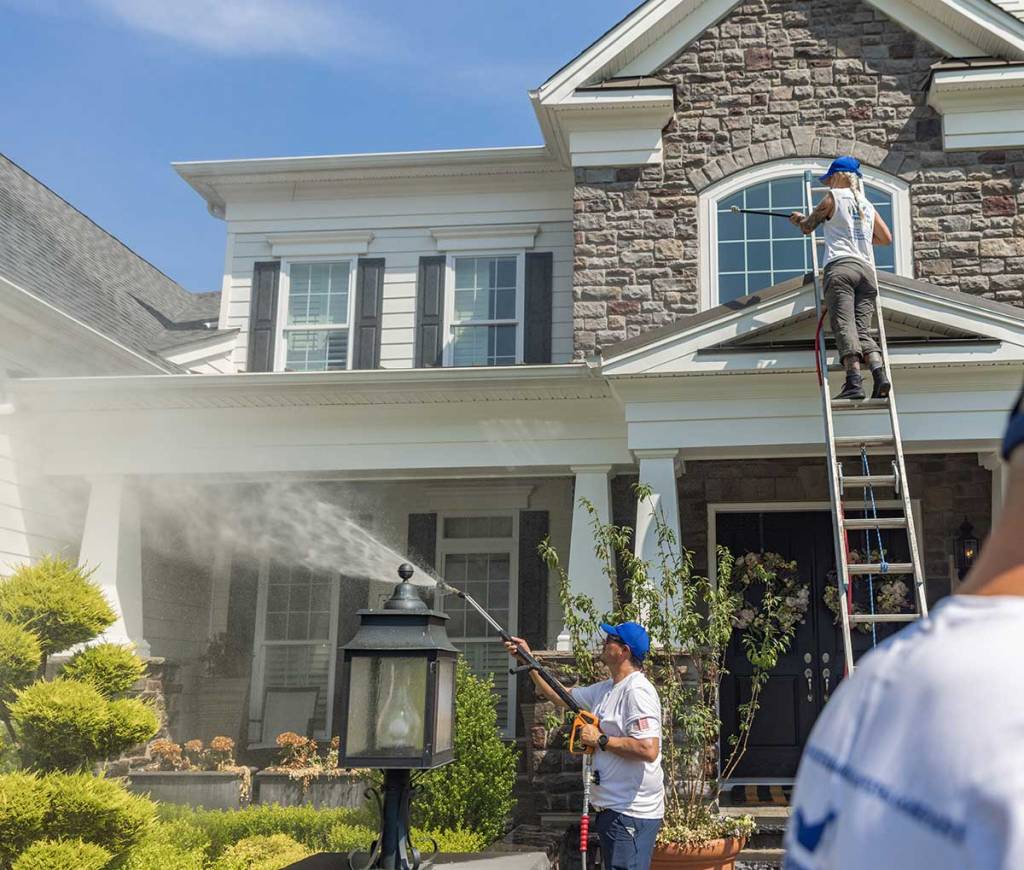
If you haven’t handled a pressure washer before, be sure to take a few minutes to practice, get a feel for the wand, and choose the most effective spray pattern. For better control and to keep your arms from tiring, use two hands.
Other pressure washing tips:
- While it’s best to wash with the wand aimed downward, at times you’ll have to point it somewhat upward, especially under soffits. When you do, remember the general rule not to drive the water directly into cracks or gaps. And always avoid shooting water up into soffit vents.
- We don’t recommend that you pressure-wash while standing on a ladder; the recoil from the pressure can knock you off balance.
- Steer clear of electrical devices like lights and outlets. You can easily cause a short circuit or break them.
Warning: Keep the wand and water stream at least 6-ft. away from electrical wires. A shock from your service wires can kill you.
- Stripping loose paint and gouging the wood in the process is the most common rookie mistake and will leave you with time-consuming, difficult wood repairs.
- Give your house at least a week of good drying weather before applying paint.